There's a saying in the medical community: "When you hear hoofbeats, think of horses, not zebras." Most of the time, the obvious answer is the right one. But sometimes, it really is a zebra.
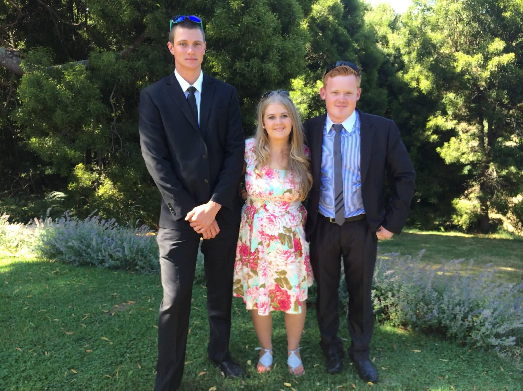
This was the case for a then 29-year old Rachel. Nine months prior, her brother had passed away without any warning.
"We had no idea that he was unwell until he was no longer with us," said Rachel. "We spent months trying to understand what happened and then we received the coroner's report which had identified that he had significant heart issues."
The news was confusing, her brother had never shown symptoms of anything serious. Because of the uncertainty and a recommendation from the coroner, Rachel's GP referred her to a cardiologist as a precaution.
"I went to the cardiologist and had all of the tests, the ultrasound, the MRIs, all of it."
The results concerned her cardiologist. "They weren't terrible, but with my family history, the cardiologist didn't like what he saw," Rachel explains.
"To be safe, the cardiologist placed a loop recorder in my chest so he could monitor my heart remotely." An implantable loop recorder is a small device used to continuously monitor heart rhythms.
Three weeks later, that decision turned out to be lifesaving. Rachel experienced a dangerous cardiac episode captured by the USB stick-sized recorder.
"It felt like whiplash," said Rachel. "Like I was healthy one day, and then not the next."
The shift was swift. After her cardiac episode Rachel was rushed into emergency and within forty-eight hours, she was in surgery having a pacemaker and defibrillator placed. Doctors then diagnosed her with arrhythmogenic right ventricular dysplasia (ARVD). A condition where scarring in the right ventricle prevents her heart from pumping blood properly.
But a clinical diagnosis was only the beginning.
Rachel spent the next six weeks in and out of hospitals, including multiple stays in the ICU. Her heart was not coping with what it had been through.
During this time, she was offered a genetic test to identify if there was an underlying genetic cause of both her condition, and her brother's sudden death. The results, however, offered no clarity.
"You have this clinical diagnosis, but it just didn't feel right," said Rachel. "It didn't explain anything and I began to lose hope. That's when I stopped trusting my body and started slowly pulling back from everything."
"I guess you could say that uncertainty is what pushed me to find out more. That's when I reached out to the Garvan Institute and joined the Elusive Hearts Study."
Led by A/Prof Jodie Ingles, Elusive Hearts is a gene discovery study focused on identifying novel causes of heritable cardiovascular diseases.
As part of the study, Rachel received her third overall genetic test. The test she had received earlier looked at 218 genes known to cause heart disease, a tiny fraction of the approximately 22,000 genes in the human genome.
Years before that, both Rachel and her brother had been tested as teenagers for hip dysplasia in a separate research project using similar technology. That test had only looked at genes involved in bone development, and nothing meaningful had come from it.
"I'd been through this twice before," Rachel said. "But we felt like we should do it. Might as well—what's the worst that's going to happen? We get no answer? We've been there, done that. It doesn't change what's happened."
"But knowledge is power. Maybe they'll find something this time. If not now, maybe in five years' time you never know."
And this time, they did find something.
The Elusive Hearts team took a sample of Rachel's DNA then sequenced her genome. The genomic data was analysed using CaRDinal, a platform developed by the Centre for Population Genomics to accelerate rare disease diagnosis and discovery.
Elusive Hearts is just one of the 40 research cohorts to use CaRDinal for data analysis. Designed for collaborative research, A/Prof Ingles and her team used the platform's variant interpretation interface to identify rare changes in the GNPTAB gene. The same changes were also found in Rachel's brother, using genomic data from the study they participated in as teens.
This finding led to a diagnosis of mucolipidosis III, a condition that typically appears in childhood. Cardiomyopathy and sudden cardiac arrest are rarely reported as a complication of the condition, which meant no one would have known to look for it in Rachel or her brother.
"The fact that it's manifested for us later in life, in a different form—no one knew to even look for it," Rachel said. "My condition didn't manifest the way anyone thought it would."
Sometimes, when you hear hoofbeats, it really is a zebra.
"Getting a clinical diagnosis didn't really change things, but getting a genetic diagnosis gave us an answer to what happened. Not only what happened to me, but to my brother," Rachel said.
"For me, I understand now what happened to us, and why. It doesn't hurt any less and I miss him more than ever, but it makes more sense to me and has helped me to come to terms with his death."
"Because of how differently Rachel's experience of mucolipidosis III presented, only genomic testing could've identified the specific cause of her condition," said A/Prof Jodie Ingles, who leads the Elusive Hearts study.
"Rachel's story also shows the importance of working collaboratively for rare disease diagnosis. CaRDinal has enabled teams to share findings with colleagues and manage analyses across many patients or families in a consistent way," said Dr Cas Simons, Lead of the Rare Disease team at CPG.
"Working together with the Elusive Hearts team to support and enable their research has not only given Rachel answers, it will also give future families answers too."
Established in 2022, more than 280 clinicians and researchers have used CaRDinal to analyse genomic data, leading to more than 450 genetic diagnoses and many novel discoveries to date.
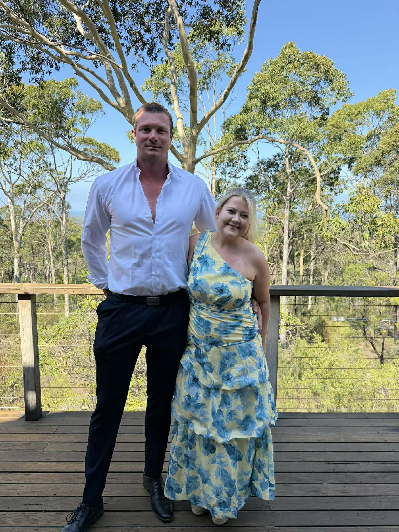
Rachel is now 33, speaking to us from her home in Canberra. She has just returned from a powerlifting session at her gym, a routine that has become a grounding force and a way for her to learn to trust her own body again.
"I don't think I could get through what happened without the support that I had, both formal and informal," said Rachel.
"I had my medical team, but I also had my family, friends and a community who helped me to learn to trust my body again and navigate the mental impact that this condition had."
"I am especially thankful for one of my friends who attends the gym I go to and saw how much I missed that part of my old life, and how fear was holding me back. She simply said, 'Why don't you come along?' and that small invitation made a big difference."
"So if anyone is going through something similar, embrace your community," said Rachel. "They're the only way to get through it. Because you can't change what's happening to you, but the community can support you to get through it."
Six months after her heart surgery, Rachel married her partner of 14 years, a milestone she wasn't sure she would be well enough to make it down the aisle for. But it became a moment that they now look back on with fond memories, and one that gave them a renewed sense of purpose and clarity.
"Knowing about my condition doesn't change what happened to me and my family, we couldn't save my brother, but maybe now knowing this information can change the outcome for another family."
For Rachel, the hoofbeats finally have a name.
Now, she and her family are no longer running blindly in the dark.